
How to Source Used Cameras from Japan
Japan is an attractive market for used cameras, lenses and accessories, but profitable sourcing depends on accurate model identification, condition standards and realistic shipping costs. A low listing price is not enough if the item has fungus, missing accessories or a problem that cannot be tested before export.
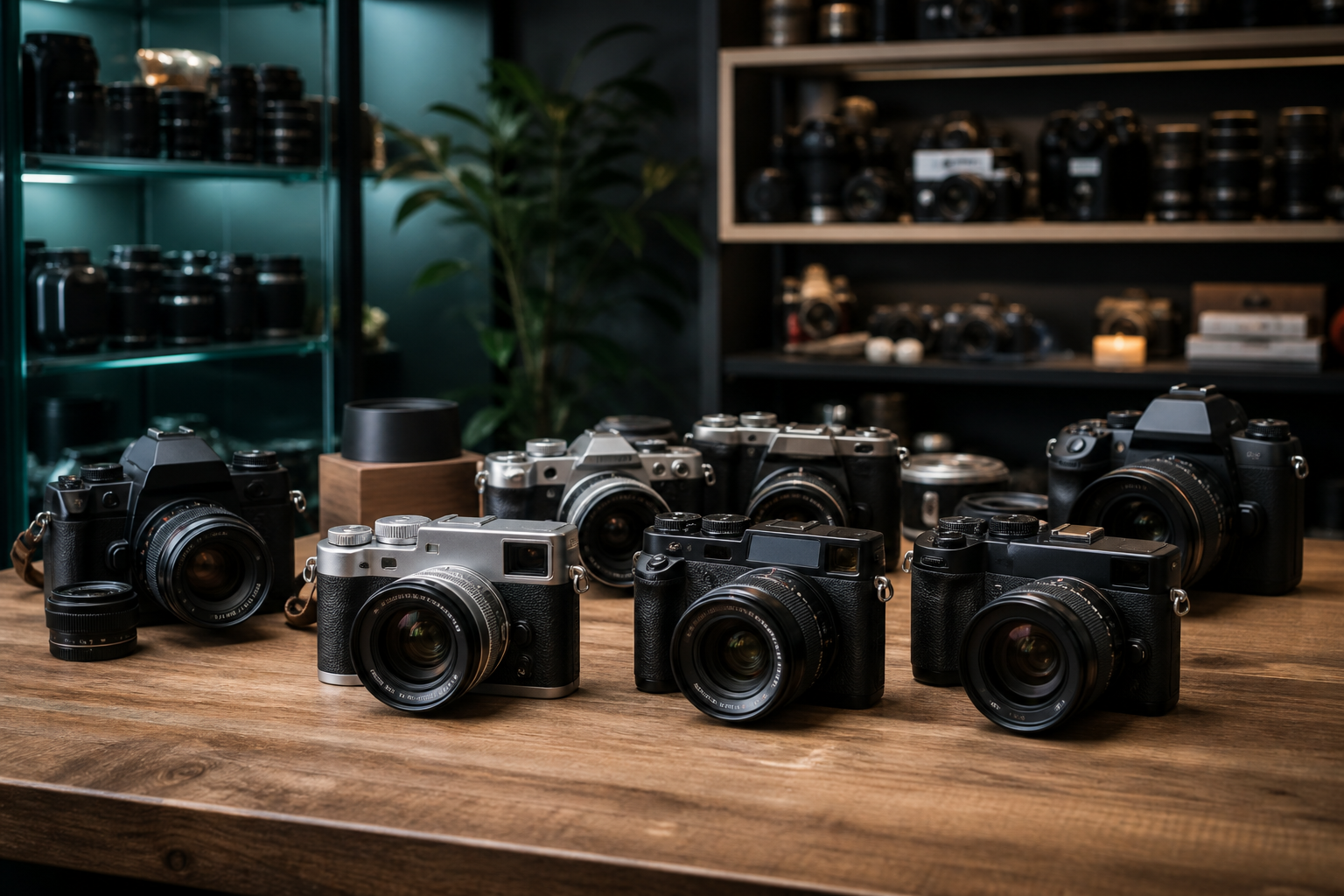
1. Choose a narrow buying focus
Start with products you can evaluate and resell confidently. A focused brief makes research faster and reduces condition disputes.
- Digital or film camera bodies
- Manual-focus or autofocus lenses
- Medium-format or compact cameras
- Tripods, flashes, viewfinders and other accessories
- Working equipment, collectible condition or parts-only inventory
Record exact model names, lens mounts, acceptable cosmetic grades, required accessories and target landed cost.
2. Build a condition checklist
Japanese marketplace descriptions vary by seller. Translate the listing, but also review every image and ask category-specific questions where possible.
- Power-on and basic operation status
- Shutter operation and reported shutter count, if available
- LCD, viewfinder and sensor condition
- Battery compartment corrosion
- Dents, cracks, missing covers and damaged mounts
- Included battery, charger, strap, caps and box
- Fungus, haze, separation and noticeable dust
- Scratches on front and rear elements
- Aperture blade condition and oil
- Focus and zoom ring movement
- Mount condition and electronic contacts
- Front cap, rear cap, hood, case and filter
3. Understand inspection limits
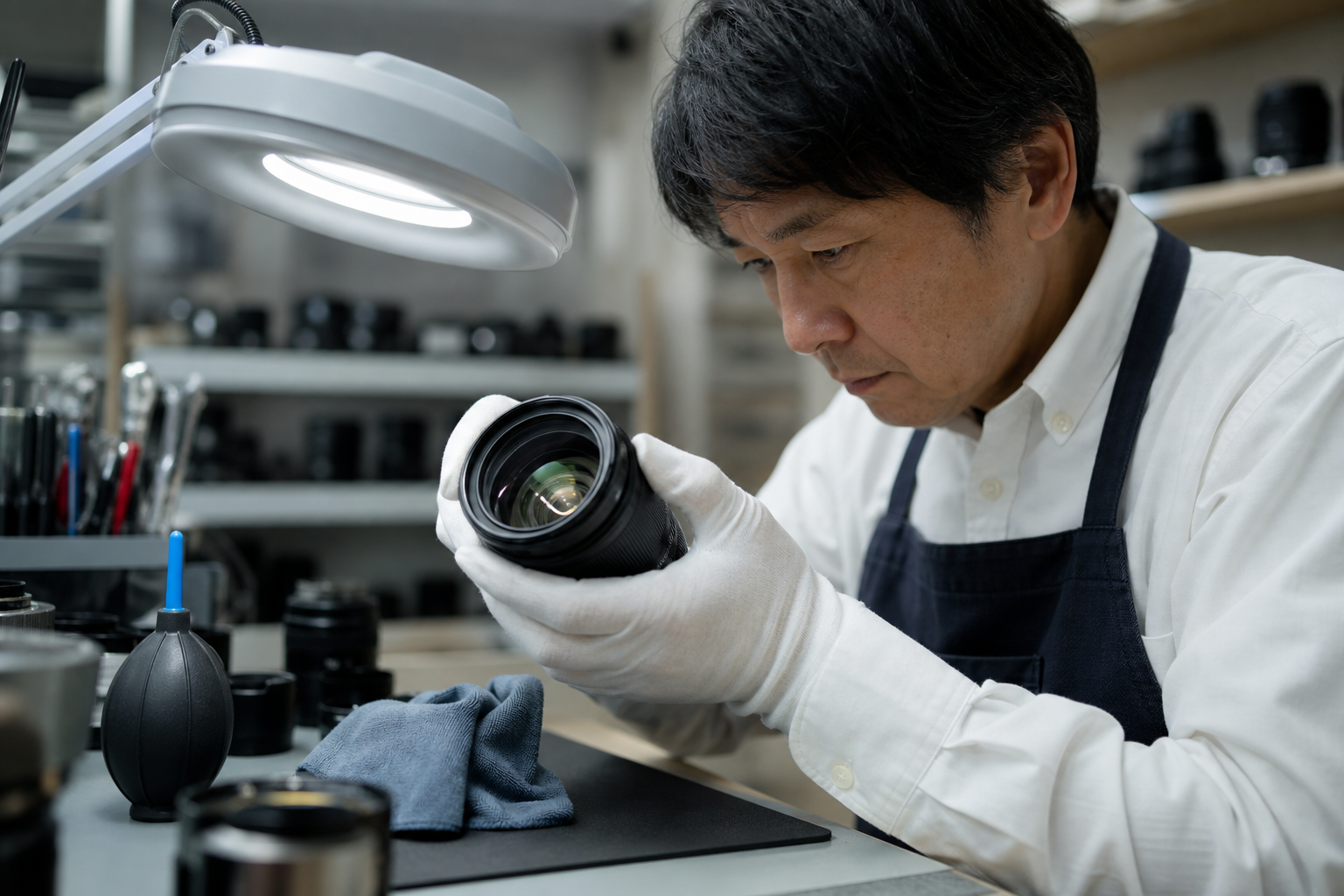
A visual receipt inspection can confirm the model, quantity, exterior condition and included accessories. Functional testing requires suitable batteries, compatible equipment and an agreed procedure. Shutter-count checks, sensor testing, film transport tests and professional lens evaluation may require additional arrangements.
4. Compare sourcing channels
Used camera stores may provide clearer grading or limited store guarantees, while marketplaces and auctions can offer a broader range and lower prices. Mercari can suit fast fixed-price decisions; Yahoo Auctions can suit rare models, lots and parts. Read our Mercari vs Yahoo Auctions comparison.
5. Calculate the resale margin by model
Use recent completed sales in your destination market, not only asking prices. Subtract marketplace fees, payment costs, returns allowance, repair risk and the complete landed cost. Create a maximum purchase price for each condition grade.
- Item price and Japan domestic shipping
- Sourcing or proxy fee
- Inspection or testing
- Protective packing and consolidation
- International freight and insurance
- Import duty, tax and local delivery
6. Pack cameras and lenses correctly
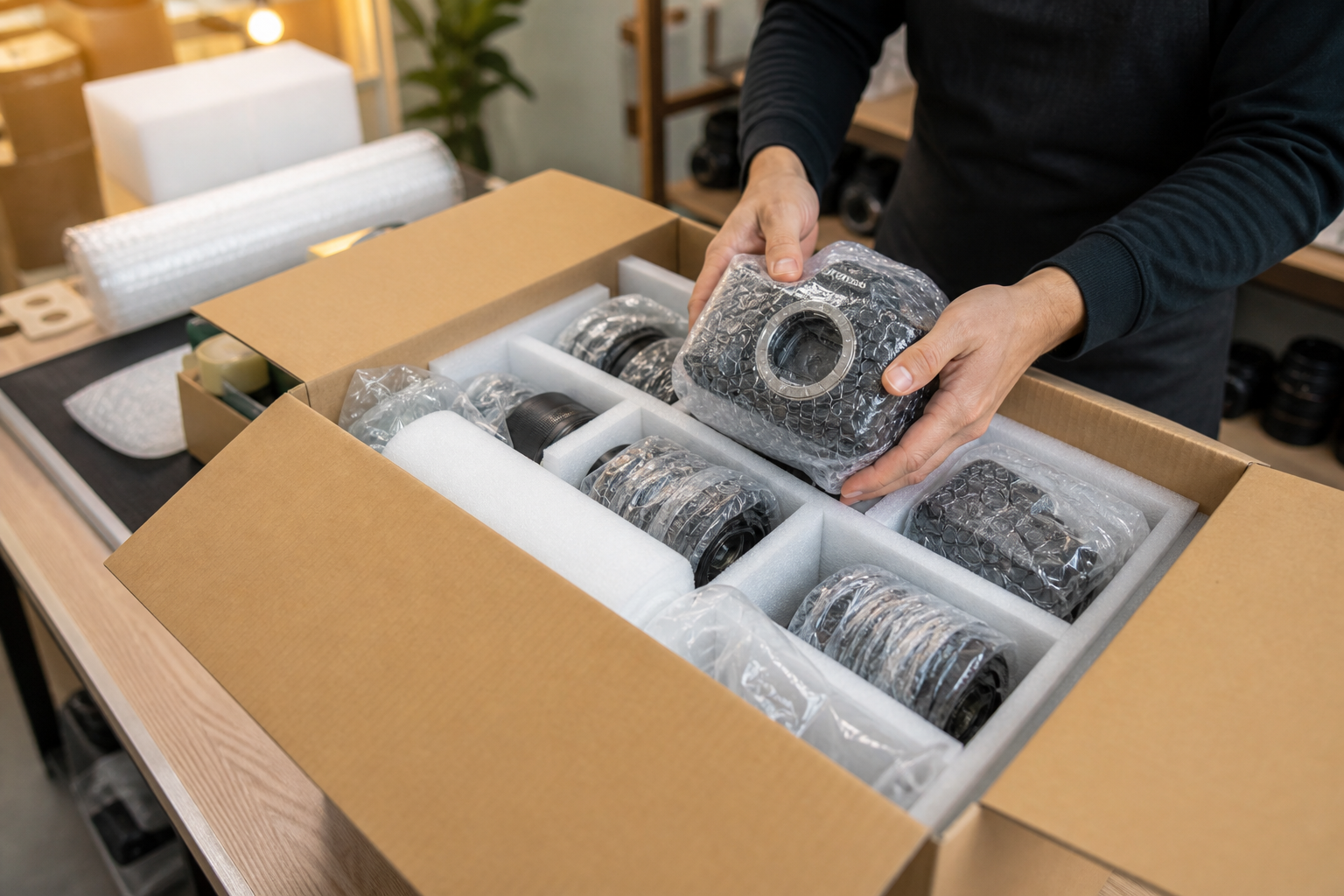
Remove loose accessories, protect lens mounts and controls, use individual cushioning and avoid placing heavy items directly against lenses or camera bodies. Original packaging can add resale value but may increase dimensional weight. High-value items may require a carrier and insurance option different from ordinary low-value goods.
Batteries can affect carrier eligibility. Japan Post notes that lithium batteries installed in equipment may be accepted only under specific conditions and not for every destination. Check current carrier rules before buying products that include batteries through the official Japan Post restrictions.
7. Start with a sample lot
A small first shipment helps you compare seller descriptions with actual condition, confirm packing quality and measure true landed cost. Photograph each item on receipt and record any issue that affects resale. Use the results to refine the next buying brief.
8. Create repeatable purchasing rules
For every model, document your maximum price, accepted defects, required accessories and testing level. This allows a Japan-based buyer to act quickly when suitable listings appear without asking the same questions each time.
Source used cameras from Japan
Virtual In can research listings or suppliers, communicate in Japanese, purchase samples, provide agreed visual checks and coordinate consolidation and international shipping.