
Last reviewed: August 2026
Product Inspection in Japan: Visual Check vs Functional Testing
“Inspected in Japan” can mean anything from confirming the parcel contains the expected item to a documented multi-function test. Define the checks, sample size and pass/fail rules before purchase or shipment.
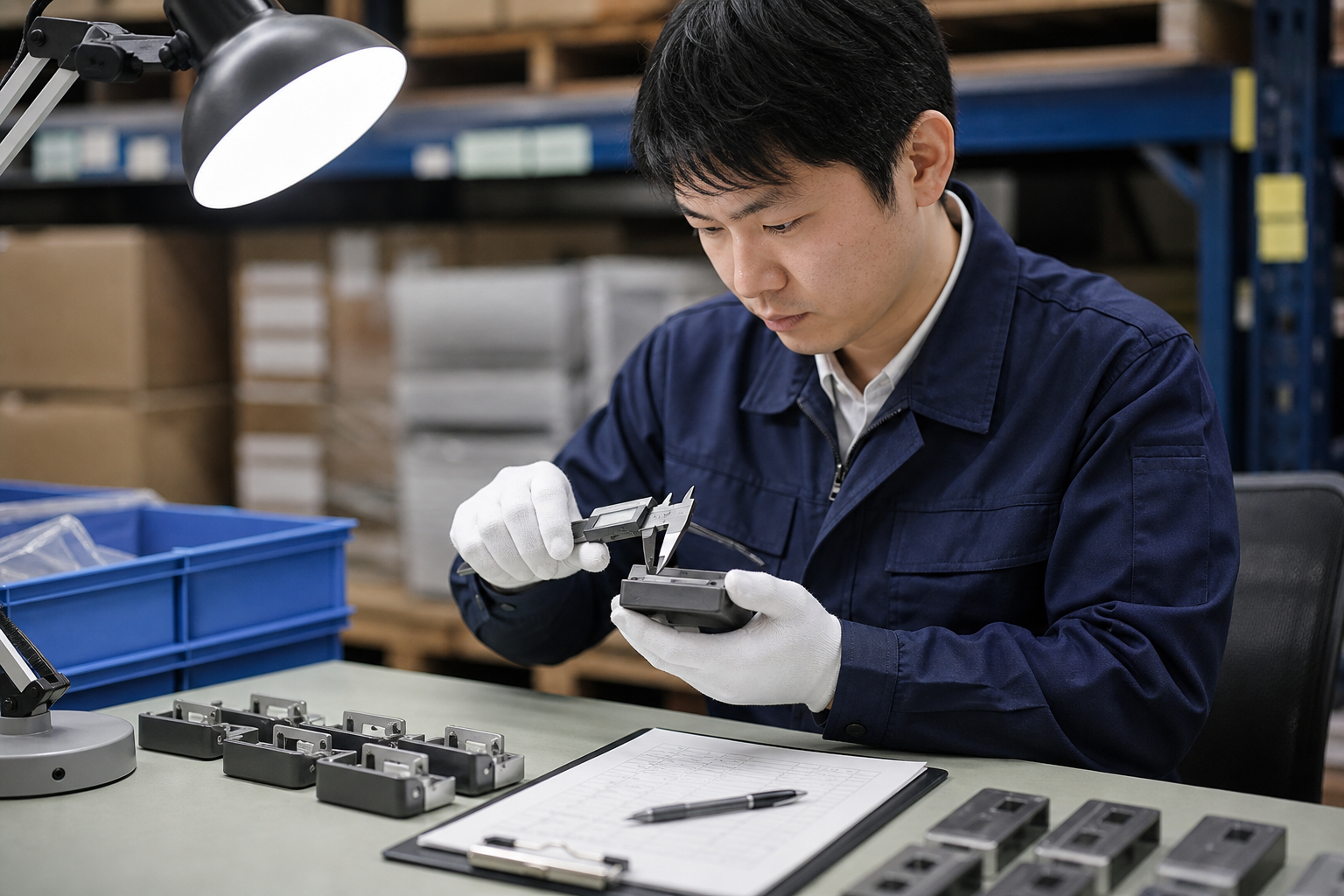
Five different levels of checking
| Level | What it can establish | What it cannot establish |
|---|---|---|
| Receiving check | Parcel count, SKU/quantity, obvious mismatch | Hidden condition or performance |
| Visual inspection | Scratches, cracks, stains, missing visible parts, label condition | Internal defects or full functionality |
| Measurement | Dimensions, weight, color or other specified attributes | Long-term performance |
| Functional test | Named operations under a written procedure | Functions not included in the test |
| Specialist authentication/lab test | Evidence within a specialist scope | An absolute guarantee against every risk |
Write a testable checklist
“Check the amplifier” is ambiguous. A useful instruction names voltage, startup, each input, both channels, volume controls, abnormal noise, display, included remote and test duration. It also states which accessories or test media are available. A pass/fail rule prevents different inspectors from interpreting the same defect differently.
Choose the sample size
For a one-off used product, inspect the actual unit. For a wholesale order, inspecting every piece may be unnecessary or too costly. A sampling plan should reflect order size, supplier history, product risk and the cost of a defect. High-risk safety or compliance characteristics may require 100% checks or laboratory testing.
Inspection timing matters
- Before purchase: seller questions and listing review reduce obvious mistakes.
- On receipt in Japan: wrong item, transport damage and visible condition can be recorded quickly.
- Before export: consolidation, labeling and packing can be checked.
- During production: manufacturing problems may be corrected before the whole run is complete.
Tell us the product and risk points to discuss a tailored Japan inspection checklist →
What a useful report contains
- Date, location, order reference and inspector
- Quantity received and quantity checked
- Checklist results with clear photographs
- Measurements and test conditions
- Defects by severity and affected quantity
- Packing condition and final recommendation
Pay for the inspection that changes a decision. Extra photos are useful only when they answer a defined question.
Have a sourcing brief?
Tell us the product, target quantity, destination and target cost. We will explain what can be researched, sampled, inspected and shipped.