
Last reviewed: August 2026
How to Buy Vintage Japanese Toys for Resale
Vintage Japanese toys reward specialist knowledge. Two similar-looking robots, sofubi figures or die-cast vehicles can differ sharply in value because of maker, year, color, accessories, restoration and box condition.
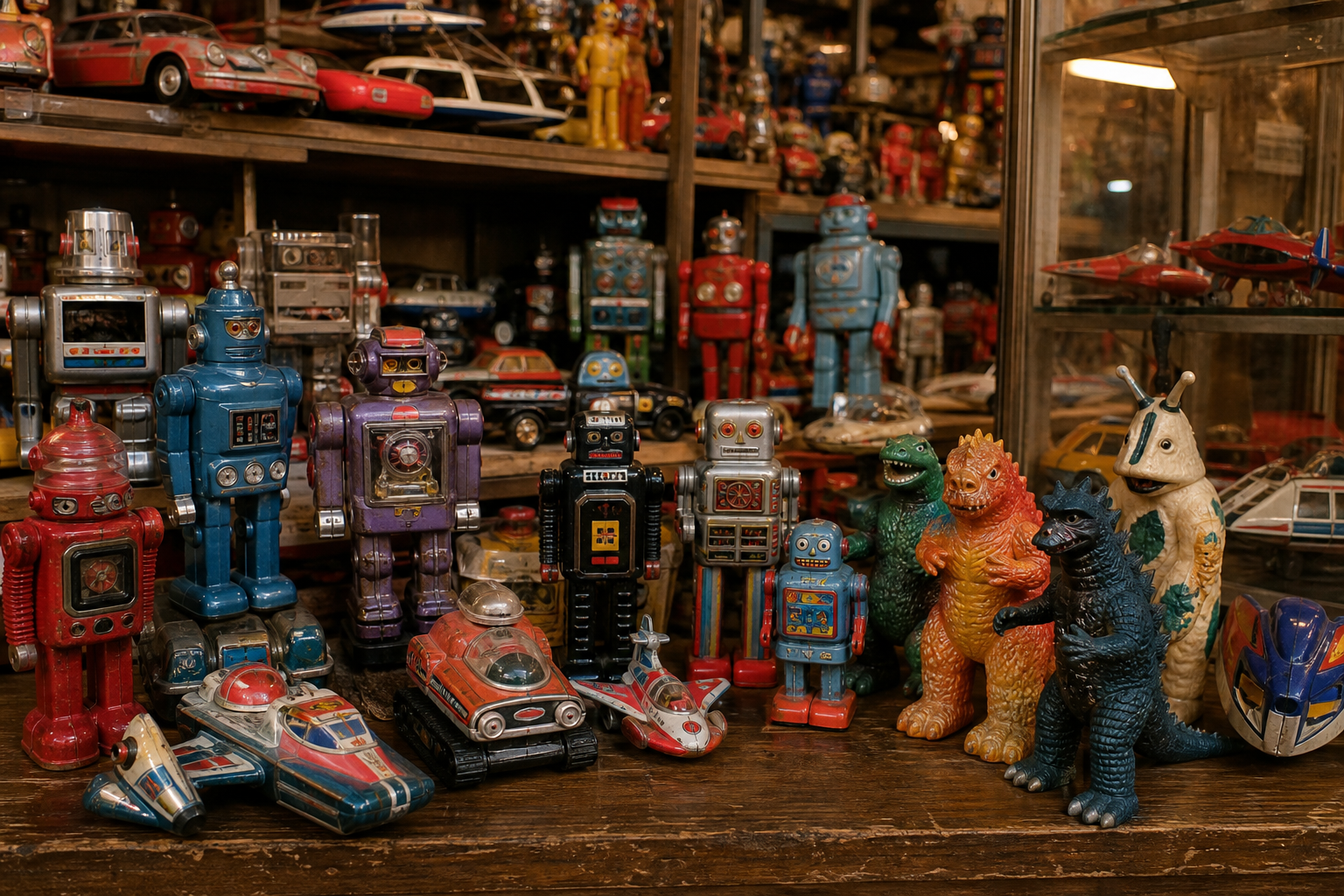
Where inventory appears
Specialist toy dealers provide expertise and clearer attribution. Auctions and flea-market apps offer volume but require more verification. Recycle shops and estate collections can be useful for local buyers who can inspect mixed lots. For repeat sourcing, focus on categories you can identify from construction and markings, not only characters you recognize.
Condition checklist by material
| Type | Important checks |
|---|---|
| Tin toys | Rust, dents, lithography, battery corrosion, key, mechanism and sharp edges |
| Soft vinyl | Fading, paint rub, splits, stickiness, deformation, marker and replacement parts |
| Die-cast | Paint chips, metal fatigue, wheels, windows, decals, accessories and repairs |
| Plastic robots/models | Yellowing, cracks, joints, electronics, missiles, stickers and completeness |
| Packaging | Originality, tears, sun fade, inserts, tape, writing and reproduction risk |
Originality and counterfeit warnings
Later reissues, reproductions and replacement accessories can resemble originals. Check maker marks, mold differences, materials, paint, screws, packaging print and documented release history. A “vintage style” description is not proof of age. For expensive pieces, use a recognized specialist and retain provenance.
Packing that protects both toy and box
- Immobilize removable accessories in labeled inner bags.
- Keep painted surfaces away from plastic wrap that may stick.
- Support delicate fins, antennae and wheels without pressure.
- Protect original boxes separately from the weight of the toy.
- Double-box valuable or brittle items and avoid oversized voids.
Calculate profit conservatively
Use recent completed sales for the same version and condition. Subtract selling fees, cleaning or restoration, missing-part allowance, careful packing, dimensional freight, import cost and expected returns. Do not price an incomplete example as though replacement parts will certainly be found.
Looking for specific makers, eras or toy types? Discuss your sourcing brief →
Build expertise before scale
Create a reference file for markings, versions and typical defects. Photograph every received item and compare your Japan grade with customer feedback. Consistency earns more than chasing every nostalgic category.
Have a sourcing brief?
Tell us the product, target quantity, destination and target cost. We will explain what can be researched, sampled, inspected and shipped.