
Last reviewed: August 2026
How to Source Japanese Trading Cards in Bulk
“Japanese trading cards in bulk” can mean sealed cases, mixed singles, graded cards or unsorted lots. Each has a different risk profile. Define the game, set, language, rarity, condition and acceptable composition before asking for a price.
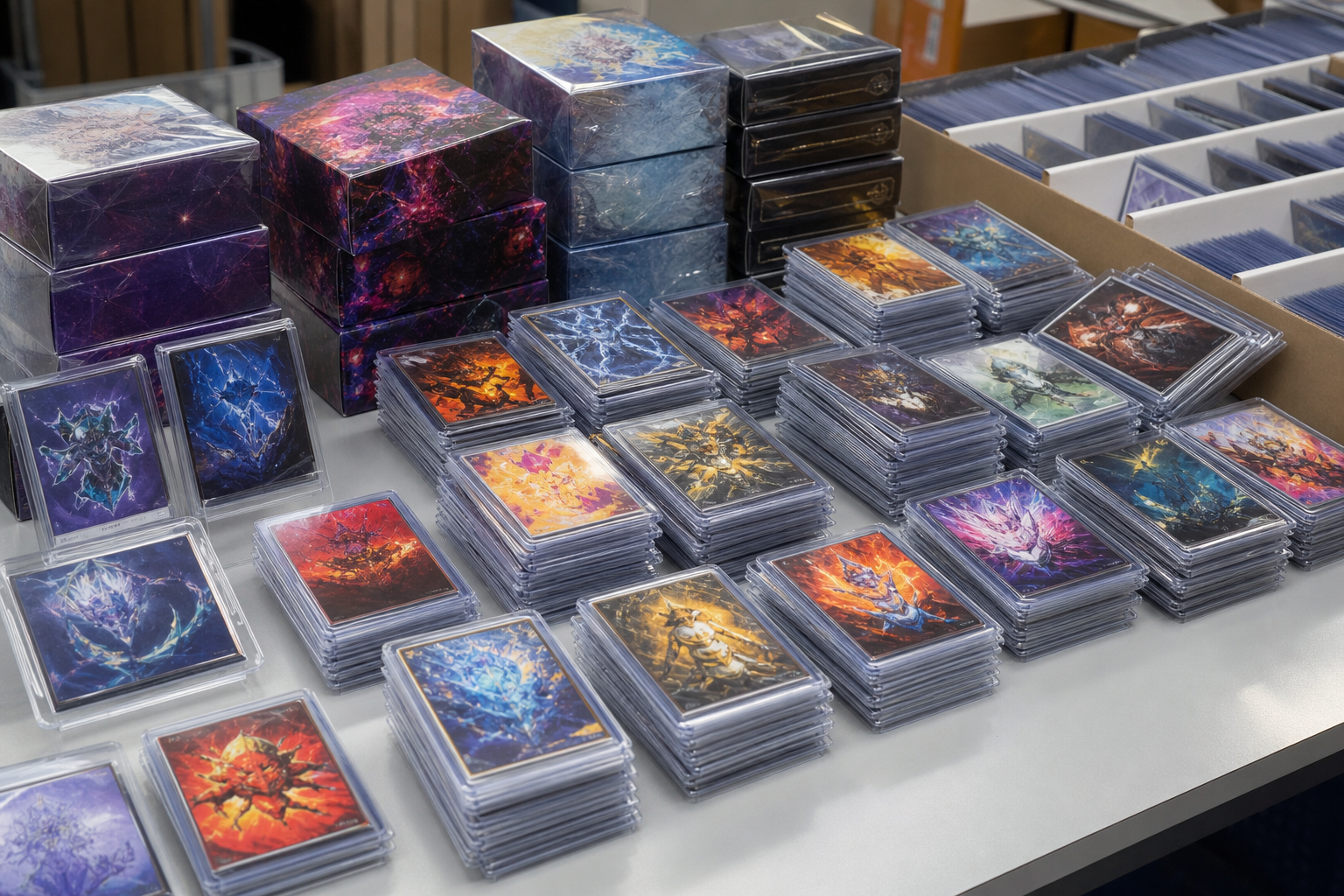
Choose the inventory model
| Inventory | Advantage | Main risk |
|---|---|---|
| Sealed cases/boxes | Efficient listing and known configuration | Allocation, resealing, release volatility and large cash exposure |
| Raw singles | Target exact cards and margins | Condition grading and counterfeit risk |
| Graded cards | Third-party holder and grade aid selling | Holder authenticity, grade premium and slower liquidity |
| Mixed bulk lots | Low unit cost and discovery potential | Cherry-picked contents, duplicates and heavy sorting labor |
Specify the lot in data
Record game, set code, release, language, rarity, quantity, duplicate limit, condition distribution and whether promotional cards are allowed. For sealed product, specify factory seal condition, case quantity and whether lot codes matter. “Assorted popular cards” is not a reproducible purchase specification.
Authenticity and condition
- Compare print quality, cardstock, cut, surface and set identifiers with known genuine examples.
- Use specialist authentication for high-value cards; photographs alone have limits.
- Define centering, corners, edges, surface scratches, dents, bends, whitening and odors.
- Agree whether writing, stamps, foreign substances or altered cards are excluded.
- Do not translate a Japanese store grade directly into your marketplace grade without a written mapping.
Supplier and allocation checks
For current sealed releases, ask whether supply is confirmed or estimated, whether quantities can be cut, and when payment becomes non-refundable. A low offer price is not useful if allocation arrives below your customer commitments. For older sealed products, verify provenance and seal details.
Packing and shipping
Use sleeves and rigid support for valuable singles, team bags or sealed protection against moisture, and correctly sized inner boxes so stacks cannot move. Graded holders need separation to prevent scratching. Large bulk lots are dense; check box strength and weight limits.
Related category guide: How to Buy Japanese Anime Goods in Bulk →
A safer first order
Use a small, fully enumerated lot or a few sealed boxes from a verifiable source. Check actual condition distribution and sell-through before buying opaque bulk. The goal is repeatable inventory, not one lucky box.
Have a sourcing brief?
Tell us the product, target quantity, destination and target cost. We will explain what can be researched, sampled, inspected and shipped.